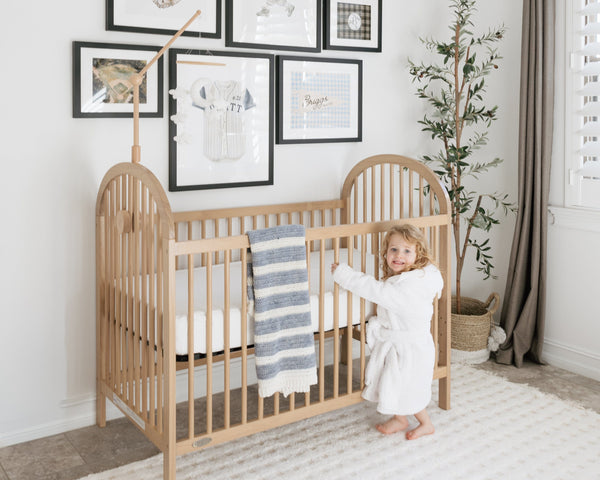


Calm is not the same as minimal. A stripped-back room can be every bit as tense as a cluttered one. All hard edges, cold light, and nothing you actually want to touch. What we are after is a room that lowers your shoulders when you walk into it.
That turns out to be fairly mechanical. Calm rooms tend to get four things right: light, texture, palette, and the number of decisions the room quietly asks you to make. Here is how each one works.
Light is the whole foundation
Nothing else on this list can rescue a badly lit room, and almost anything can be forgiven in a well lit one.
The single biggest change most people can make is to stop lighting from the ceiling. One overhead fixture throws a flat, downward light across everything, which reads as functional. Kitchens, offices, waiting rooms. It is the lighting of places you go to get things done.
Replace it with three or four smaller sources at different heights. A floor lamp behind the sofa, a table lamp at elbow height, something low near the floor. The eye reads multiple pools of warm light as evening, and evening is exactly the state you are trying to induce.
Two specifics worth the effort. Get bulbs at 2700K or warmer. The number is printed on the box, and going from 4000K down to 2700K will change a room more than new cushions ever will. Then put the lamps you use at night on a dimmer or a smart plug, so "settling in" becomes one action instead of four separate trips around the room.
Texture is what minimalism usually forgets
A room can be perfectly composed and still feel like a furniture showroom. Nine times out of ten the missing ingredient is texture.
Hard surfaces bounce sound and light. Soft ones absorb both. A room with a rug, curtains and a couple of textiles is measurably quieter than the same room without them, and quiet, more than anything else on this page, is what people actually mean when they say calm.
You want three or four distinct surfaces in the same view. Something woven, something plush, something matte, something with a bit of grain. A jute rug, a deep pile throw, a linen cushion, an unfinished wood table. That is a complete texture story and it does not need a single colour to work.
The failure mode is repetition. Four smooth cushions on a smooth sofa in front of a smooth rug reads flat no matter how much each individual piece cost.

Palette: narrow, and warm
Calm rooms are almost always built on a narrow palette. Two or three tones in one family, then texture to keep it from going flat.
Warm neutrals do this more easily than cool greys. Sand, oat, taupe, clay, espresso. Greys need a lot of warm light to avoid reading as austere, so if your room already leans grey, the fastest correction is a warm textile and warmer bulbs rather than repainting anything.
Then allow yourself exactly one deviation. A single deeper shade, olive or rust or ink, gives the eye somewhere to land. Two deviations start a conversation between themselves and the room gets busy.
A useful test: photograph the room and convert it to black and white. If everything collapses into one flat grey, what you need is contrast, not colour.
Reduce the decisions the room asks of you
This is the least obvious rule and probably the most powerful.
A room feels restful in proportion to how few unresolved questions it contains. A pile of post on the table is a question. Six remotes is a question. A chair with a coat on it is a question you have been ignoring for a week. None of them are visually dramatic, and every one of them costs you a little something each time you look at it.
You do not need to become a tidy person. You need a destination for the three things that always end up out. A bowl for keys, a basket for blankets, a drawer for cables. Named homes for the specific objects that genuinely accumulate in your house, not a vague ambition to keep surfaces clear.
The blanket basket earns its place twice over here. It answers the question, and it puts the softest thing in the room within arm's reach.
Arrange for people, then for the room
Push the sofa off the wall, even by a few inches. Rooms where every piece of furniture is pinned to the perimeter feel like a dentist's waiting area.
Get the seating close enough that people can talk without raising their voices. Around eight feet between facing seats is comfortable, and most living rooms are arranged wider than that because the furniture was placed to fit the walls rather than the conversation.
And give every seat a surface within reach. Somewhere to put a cup is the difference between a chair people sit in and a chair people look at.
The layer that makes it usable
A calm room you cannot get comfortable in is just a nice photograph.
Keep a generous throw on the sofa permanently. Not folded for display, genuinely there, and big enough to cover an adult properly. The point is that comfort should require no preparation. No fetching, no unfolding, no decision.
The same logic applies to a floor cushion, a footstool, a lamp you can reach without standing up. Every bit of friction you remove between sitting down and being comfortable is a small permanent improvement to the room.
Sound, quietly
Worth naming because it is so rarely considered. Bare floors, bare walls and big windows make a room echo, and echo reads as tension even when you are not consciously listening for it.
A rug with a pad underneath it, full length curtains rather than blinds, and a few soft surfaces will take the edge off almost any room. If you have ever wondered why a space feels harsh despite looking right on paper, this is usually the answer.
Five things, in order
- Turn off the overhead light and add three warm lamps.
- Add a rug, and put a pad under it.
- Get three or four genuinely different textures into the same view.
- Give the three objects that always end up out a permanent home.
- Leave a very good blanket on the sofa and never put it away.
None of this requires renovating anything. Most of it can be done in an afternoon, and the room you end up with is one you will actually want to sit still in.